METAL CUTTING TOOLS
Holemaking Tools
Drilling, hole-starting, countersinking and large-hole machining tools for CNC machining, conventional machines, fabrication and on-site engineering.
Select the holemaking tool by hole diameter, depth, required accuracy, workpiece material, machine capability, coolant delivery and production requirement. MachineryPLUS supplies solid carbide drills, indexable drills, crown drills, annular cutters, spade drills, step drills, taper drills and related holemaking systems.
Choose by Holemaking Operation
Start with what the hole must do, then select the tool family that best matches diameter, depth, tolerance and machine setup.
Establish accurate drill position before the main drilling operation where hole location and entry control are important.
High-rigidity drills for precision holemaking, CNC machining and productive general drilling.
Replaceable-insert drilling systems for productive medium and larger diameter holemaking.
Replaceable crown systems combine a reusable drill body with replaceable cutting heads.
Remove only the annular ring of material, making them highly effective for large through holes in structural and fabrication work.
Portable magnetic-base machines commonly paired with annular cutters for structural steel and on-site holemaking.
Replaceable blade drilling systems for larger holes, deeper drilling and robust general engineering work.
Produce multiple diameters, enlarge existing holes or create stepped features with one tool.
Produce or enlarge tapered holes and specialised tapered hole geometry.
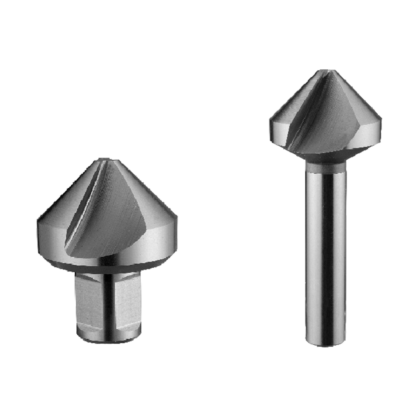
Produce countersinks, chamfers and edge preparation around existing holes.
When final diameter, roundness or tolerance exceeds normal drilling capability, use a dedicated finishing process.
Choose by Hole Type
Hole geometry often determines the correct tool family before cutting speed or grade are considered.
Use solid carbide, indexable, crown or spade drilling according to diameter and depth.
Consider breakout condition, exit burr, chip evacuation and tool length.
Confirm usable drilling depth, drill-point allowance and chip evacuation.
Step drills can combine multiple diameters or hole features in a single tool.
Use taper drills or specialised tooling matched to the required taper.
Match countersink angle and diameter to the fastener or drawing requirement.
Larger holemaking often benefits from replaceable-edge or annular cutting systems.
Use drilling to establish the hole, then ream or bore when tighter tolerance is required.
Solid, Indexable or Replaceable Cutting Edge?
Tool construction affects diameter range, hole accuracy, productivity and replacement cost.
Solid carbide drills provide high rigidity and are well suited to precision CNC drilling, particularly in smaller and medium diameters.
Replaceable inserts reduce body replacement cost and suit productive medium-to-large diameter drilling.
Crown drills use replaceable heads while retaining the drill body.
Spade drilling uses a replaceable cutting blade, offering flexibility for larger diameter and deeper hole applications.
Annular cutters remove less material than a full-diameter drill, reducing power demand in many large through-hole applications.
Check Hole Depth and Length-to-Diameter Ratio
As hole depth increases, chip evacuation, coolant delivery, rigidity and runout become increasingly important.
Short holes generally offer easier chip evacuation and greater freedom in cutter selection.
Confirm flute space, coolant delivery and tool rigidity as depth increases.
Deep drilling requires careful control of runout, chip evacuation, coolant and drilling sequence.
Choose by Material
Workpiece material influences cutting geometry, carbide grade, coating, coolant and cutting data.
Carbon steel, alloy steel and general engineering steels.
Austenitic, ferritic, martensitic and duplex stainless steels.
Grey cast iron, ductile iron and related cast materials.
Aluminium, copper, brass and other non-ferrous materials.
Titanium, nickel-based alloys and other difficult-to-machine materials.
Hardened steels and other high-hardness holemaking applications.
Check the Complete Holemaking Setup
Hole size alone is not enough to select the correct drill.
Determine finished diameter and allowable tolerance.
Confirm drilling depth, usable flute length and tool reach.
Determine whether drilling alone is sufficient or a finishing process is required.
Match geometry, grade and coating to the material being drilled.
Internal coolant becomes increasingly valuable as drilling depth and chip volume increase.
Confirm spindle power, speed range, toolholding rigidity and machine stability.
Low runout improves load sharing, hole accuracy and tool life.
Hole termination affects drill-point allowance, chip evacuation and bottom geometry.
Balance initial tooling cost, cycle time, edge replacement and tool life.
Centre Drill or Spotting Drill?
Both can establish hole position, but they are not the same tool.
Used primarily to create a controlled starting feature for subsequent drilling on CNC machines.
Traditionally used to produce centre holes and combined pilot / countersink geometry for centre-supported machining.
Use a spotting drill when the goal is drill guidance; use a centre drill where a true centre-hole feature is required.
Keep the Cutting Edge Supplied and the Flutes Clear
Holemaking traps chips inside the workpiece, so coolant and chip evacuation are fundamental to process reliability.
Can be suitable where chips have a short, open path out of the hole.
Through-tool coolant improves cooling and chip evacuation, particularly as depth increases.
Poor chip evacuation can increase torque, damage the cutting edge and reduce hole quality.
Drilling May Not Be the Final Operation
Final hole requirements determine whether drilling alone is sufficient or a finishing operation should follow.
For many general engineering holes, a suitable drill can provide the required result directly.
Reaming can improve final hole size, roundness and surface condition after a correctly prepared drilled hole.
Boring provides controlled diameter adjustment and is widely used for precision larger-diameter holes.
Start with the Hole Requirement
Start with a Solid Carbide Drill and confirm diameter, depth and coolant.
Consider U Drills or Crown Drills where replaceable cutting edges are preferred.
Start with Annular Cutters, often used with Magnetic Drills.
Consider Spade Drills where the application suits a replaceable blade system.
Start with Step Drills or a purpose-designed stepped tool.
Start with Taper Drills and confirm the required taper geometry.
Use a Spotting Drill for drill guidance or Centre Drill for centre-hole features.
Start with Countersinks and match the required angle and diameter.
Plan a drilling operation followed by reaming or boring where required.
Browse Holemaking Tools
Explore available drilling, hole-starting, countersinking and portable holemaking categories below.